
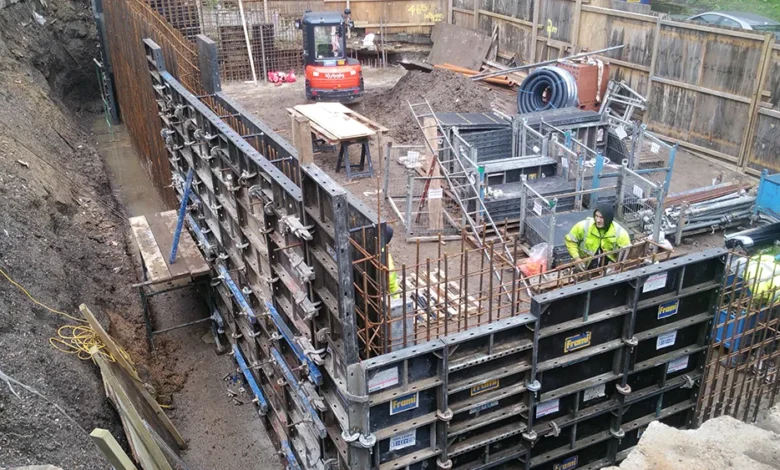
Why Ground Conditions Control Construction Decisions
Conditions in the ground control how every building performs over time. Analysis of soil type, local water table, and load bearing capabilities can be tested prior to any design work through poor groundworks services. When this data is not available or is incorrect, planning becomes speculation rather than science.
Soil strength and drainage behaviour are then predicted incorrectly, which causes further assumptions to be faulty. Inaccurate ground investigation influences the response of foundations to imposed loading and the effects of seasonal variations. London civil engineering contractors depend on accurate ground data to ensure that what is built reflects actual site circumstances.
Misunderstanding ground conditions leads to project delays, redesign costs, and health and safety hazards. Sound research is not a luxury but a long lasting structural necessity.
How Inadequate Groundworks Impact Structural Design
Architecture depends on accurate site information for load paths and material demands. Groundworks services provide data related to excavation depths, earth retaining systems, and groundwater levels. When this information is incorrect, the structure may involve excessive material use or become unsafe.
Using sub construction data, a structural engineer London is able to calculate foundation size, reinforcement quantity, and how stress is distributed. Errors in soil information result in either over designed or under designed foundations. Both outcomes increase risk.
Over engineered buildings increase construction costs unnecessarily. Under designed structures lead to cracking, settlement, and eventual failure over time. This is why structural performance relies on proper groundwork planning.
Why Drainage Failures Originate From Poor Groundworks
Construction water management is one of the most critical subjects in the industry. Groundworks services define the movement of surface water and groundwater across a site. Poor drainage design can reduce soil strength and lead to differential settlement.
Excavation data is used by civil engineering contractors London to align drainage routes with foundations and utility ducts. Drainage systems designed at incorrect levels and gradients allow water to collect instead of directing it away from foundations.
Excess water pooling caused by inadequate drainage leads to soil erosion and the build up of hydrostatic pressure, which results in foundation movement. These issues often appear years later, causing higher maintenance costs or structural repairs.
Examples of drainage problems caused by poor groundwork planning include
· Areas of water pooling around foundation bases
· Increased groundwater pressure acting on retaining structures
· Soil weakening beneath load bearing elements
· Poor alignment that blocks inspection access
How Poor Groundworks Disrupt Construction Coordination
Coordination of Construction Activities
Construction requires accurate setting out data. Groundworks services provide reference points to correctly position roads, utilities, and building foundations. When this data is inaccurate, positioning errors multiply across all trades.
Groundwork layouts align with construction workflows. In most cases, civil engineering contractors London rely on these layouts to coordinate drainage, electrical services, and access roads. If site levels are incorrect, utilities can clash with foundations, leading to costly rework.
Poor coordination results in project delays and excessive labour costs. It also increases the risk of site errors that are difficult to correct once concrete has been poured.
How Soil Is Tested to Ensure Long Term Stability
Soil testing explains how ground responds to loading and changes in water levels. Groundworks services include soil classification, bearing capacity testing, and settlement analysis. Skipping or reducing this step can be the difference between a stable foundation and a problematic one.
Soil test reports guide a structural engineer North London when selecting the appropriate foundation system. Without reliable data, design assumptions are made, which increases the risk of differential settlement.
Soil properties change over time due to rainfall and seasonal temperature variation. Understanding these conditions early helps prevent long term structural movement and surface cracking.
Common soil testing failures caused by inadequate groundworks include
· Incorrect assessment of bearing capacity
· Unplanned sedimentation after construction
· Foundation movement during wet and dry seasons
Insufficient selection of soil treatment methods can further compromise foundation performance.
How Poor Groundworks Increase Compliance and Safety Risks
Building codes mandate evidence that excavations and foundations are safe. Groundworks reports are created for approval and inspection. Poor documentation creates compliance issues.
Groundworks data is submitted by civil engineering contractors London to authorities prior to the commencement of construction. If documents are not complete or accurate, approvals can be delayed or even declined.
There are also safety hazards and risks when tools and machinery fail to correctly judge excavation depths, slopes, and soil stability. This places workers and buildings in danger without reason.
Why Accuracy of Groundworks Matters for Foundation Performance
Structures and soil interact through the foundation. Groundworks define the depth, width, and treatment of foundations. Poor below ground work results in substructures that do not perform according to site conditions.
Foundation failure rarely happens suddenly. It is the result of cracking, tilting, and settlement over many years. These problems can often be traced back to early foundation errors.
Proper planning and preparation at the foundation stage provides uniform load support throughout the structure’s service life.
Impact of Poor Groundworks on Project Cost and Schedule
Errors in preliminary stages increase costs down the road. Our range of groundworks reduces risk and eliminates the need for rework. If you have a bad foundation, you will inevitably have poor site conditions on which to build.
London groundwork and civil engineering contractors can face additional excavation, material, and redesign costs when working with unreliable groundwork information. These accumulated costs often far exceed the initial investigation budget.
Delays also damage a project’s reputation as well as its contractual commitments. These issues can be avoided through the use of quality ground analysis.
Cost consequences associated with inadequate preparation of the ground are
• Modifications to foundations and drainage
• Longer construction periods
• Increased material consumption
• Higher long term maintenance costs
How Trustworthy Groundwork Makes Way for End to End Construction
Each step of construction relies on the one before it. Preliminary groundwork supports planning, design, and delivery through the establishment of informed site intelligence.
Structural design, drainage planning, and infrastructure tracking all rely on the accuracy of foundation data. Without it, even the best design teams are constrained.
Reliable ground data ensures construction is based on real conditions rather than assumptions. This leads to safer buildings, controlled costs, and more predictable outcomes.