Retail businesses today operate in a highly competitive environment where efficiency and accuracy are essential. Managing inventory, sales, finance, and customer information manually can slow down operations and lead to costly mistakes. Because of this challenge, retailers are increasingly adopting digital solutions that streamline business processes. In the middle of this transformation, Erp For Retail has become an essential technology that helps businesses integrate all operations into a single platform.
Retail management requires coordination between multiple departments such as purchasing, inventory, billing, and customer service. Efacto provides modern ERP solutions designed to help retailers manage their entire business efficiently through a centralized system that improves productivity and decision making.
Erp For Retail Improves Business Efficiency
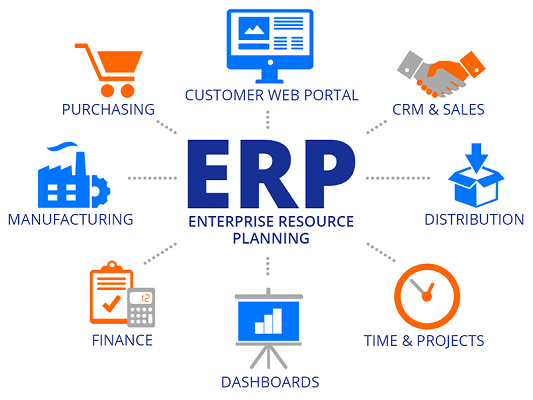
Retail operations involve several daily activities including product management, stock tracking, billing, supplier coordination, and reporting. Handling these processes separately can create confusion and delays. A well-implemented ERP system integrates all these tasks into one system, allowing retailers to operate more efficiently.
When businesses adopt integrated software solutions, employees can access accurate information instantly. In the middle of business operations, Erp For Retail helps streamline workflows by connecting sales data with inventory and accounting systems. This integration eliminates the need for repetitive data entry and reduces the risk of errors.
Retailers can also generate automated reports, which saves time and improves transparency in business performance analysis.
Erp For Retail Simplifies Inventory Management
Inventory management is one of the most critical components of retail success. Without proper stock tracking, businesses may face problems such as overstocking or product shortages. Both situations can negatively affect revenue and customer satisfaction.
An ERP system helps retailers maintain complete control over inventory levels. Every product movement is automatically recorded within the system. During inventory monitoring processes, Erp For Retail allows businesses to track stock levels, monitor product demand, and receive alerts when inventory reaches a minimum level.
This functionality helps retailers make informed purchasing decisions and maintain the right balance between supply and demand. Efacto offers powerful ERP tools that allow retailers to manage thousands of products while maintaining accurate inventory records across multiple store locations.
Erp For Retail Supports Better Sales Management
Sales management plays a key role in determining the profitability of any retail business. Retailers need accurate data about product performance, customer demand, and seasonal trends in order to maximize revenue.
Modern ERP systems connect sales data directly with other business functions. As transactions occur, the system automatically updates inventory and financial records. Within sales tracking activities, Erp For Retail enables retailers to monitor product performance and identify top-selling items quickly.
Retail managers can also analyze sales trends over different time periods. This insight helps businesses create better pricing strategies, promotional offers, and marketing campaigns.
Additionally, centralized sales information improves coordination between store managers and business owners.
Erp For Retail Enhances Customer Relationship Management
Customer satisfaction is one of the most important factors for long-term retail success. Businesses that understand customer preferences can provide better services and build stronger relationships.
An ERP system allows retailers to maintain detailed customer profiles, including purchase history and preferences. This data helps businesses personalize their marketing strategies and offer relevant promotions.
During customer engagement activities, Erp For Retail allows retailers to track buying behavior and design loyalty programs that encourage repeat purchases. By understanding customer patterns, businesses can create targeted marketing campaigns that improve retention rates.
Efacto focuses on delivering ERP solutions that help retailers improve both operational efficiency and customer relationship management.
Erp For Retail Provides Real Time Business Insights
Retail businesses generate large amounts of data every day. However, without proper tools, it can be difficult to analyze and interpret this information effectively.
ERP systems provide advanced reporting and analytics features that transform raw data into meaningful insights. Retailers can monitor sales performance, product demand, and operational efficiency through detailed dashboards.
During business performance evaluation, Erp For Retail enables decision makers to access real time reports that support strategic planning. Managers can quickly identify areas that require improvement and take immediate action.
This data-driven approach helps businesses remain competitive and respond quickly to changing market conditions.
Erp For Retail Enables Multi Store Management
Many retail businesses expand by opening multiple outlets across different locations. While expansion increases revenue opportunities, it also introduces new operational challenges.
Managing inventory, employees, and sales across multiple stores requires a centralized system. ERP platforms allow retailers to control operations for all outlets from a single interface.
In multi-store retail environments, Erp For Retail provides centralized monitoring of inventory, sales reports, and operational performance. Business owners can easily compare store performance and identify areas that need improvement.
Efacto provides scalable ERP solutions that support growing retail businesses by enabling seamless management across multiple branches.
Erp For Retail Improves Financial Control
Financial management is a critical component of running a successful retail business. Tracking expenses, managing invoices, and monitoring profits require accurate and reliable systems.
ERP software integrates financial processes with sales and inventory operations. This integration ensures that every transaction is automatically recorded in the accounting system.
During financial monitoring processes, Erp For Retail allows retailers to track revenue, expenses, and profitability in real time. Business owners can generate financial reports that provide a clear overview of their financial health.
This transparency helps businesses maintain better financial control and plan future investments with confidence.
Erp For Retail Supports Business Scalability
Retail businesses that plan for long-term growth need systems that can scale with their expansion. Traditional software solutions may struggle to handle increasing data volumes or operational complexity.
ERP systems are designed to grow alongside the business. Retailers can add new modules, integrate additional stores, and expand product catalogs without disrupting existing operations.
In business growth strategies, Erp For Retail provides flexibility and scalability that supports continuous expansion. Retailers can adapt to market changes while maintaining operational efficiency.
Efacto offers ERP solutions that help businesses evolve with modern retail trends and technological advancements.
Conclusion
The retail industry is undergoing rapid digital transformation as businesses adopt advanced technologies to remain competitive. Efficient management of inventory, sales, finance, and customer relationships is essential for sustainable growth. Modern ERP systems provide retailers with the tools they need to manage these operations seamlessly.
By integrating multiple business processes into a single platform, Erp For Retail helps businesses improve efficiency, reduce operational errors, and gain valuable insights from data. Efacto delivers reliable ERP solutions designed specifically for retail businesses seeking to streamline operations and achieve long-term success.