
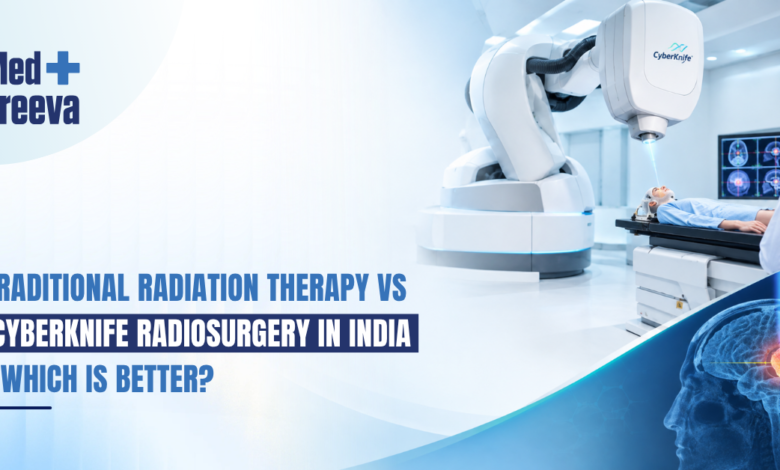
A brain tumor diagnosis can bring difficult decisions about surgery, radiation, and monitoring. Stereotactic radiosurgery provides a focused option for selected patients without an open surgical incision. People researching Cyberknife for Brain Tumor in India can explore eligibility, planning, recovery, and risks before meeting a specialist. MedTreeva can provide treatment information. Treatment selection should follow specialist evaluation.
Cyberknife for Brain Tumor in India and Treatment Planning
CyberKnife is a robotic radiation delivery system used for stereotactic radiosurgery and radiotherapy. Mayo Clinic explains that radiosurgery uses focused radiation beams from multiple angles and does not require a skin incision. Linear accelerator systems used for radiosurgery include CyberKnife, and it can treat selected brain cancers and benign tumors.
For patients considering Cyberknife for Brain Tumor in India, planning begins with imaging and specialist assessment. MRI and other scans help define the target and nearby critical structures. The team determines whether focused radiation or another treatment is more suitable.
Suitable Brain Conditions and Tumor Characteristics
Not every brain tumor requires CyberKnife treatment. Cyberknife for Brain Tumor in India may be considered when size, location, number, previous treatment, and relationship to sensitive structures make stereotactic treatment appropriate. Indian hospitals describe applications that can include selected brain metastases, meningiomas, acoustic schwannomas, pituitary tumors, and vascular malformations.
A multidisciplinary team helps match treatment with the diagnosis and condition.
How CyberKnife Delivers Focused Radiation
During Cyberknife for Brain Tumor in India treatment, a robotic arm directs radiation beams toward the planned target from different angles. Each beam delivers a relatively small dose as it travels through tissue, while the combined dose is concentrated at the target. Real-time imaging can help maintain positioning accuracy.
Unlike open brain surgery, radiosurgery does not involve opening the skull. Treatment may require one or several sessions.
Preparation Before the Procedure
Before Cyberknife for Brain Tumor in India, the care team reviews imaging, pathology, previous treatments, medicines, and medical history. A radiation oncologist creates a plan based on tumor dimensions and nearby structures.
Some plans use a customized immobilization device to help maintain a stable position. Preparation is individualized, so patients should follow instructions from their treatment center.
Treatment Sessions and Patient Experience
A typical Cyberknife for Brain Tumor in India session is performed in an outpatient environment. Imaging verifies the target before radiation. Apollo Hospitals states that CyberKnife treatments are commonly delivered in one to five sessions, depending on the tumor and treatment plan.
The non-invasive procedure generally requires no incision or general anesthesia. Duration varies by tumor location, size, and plan.
Benefits and Treatment Expectations
For selected patients, Cyberknife for Brain Tumor in India can provide focused radiation without open surgery. It may help when a lesion is difficult to access surgically. Benefits depend on the diagnosis and individual circumstances.
Radiosurgery targets abnormal tissue while limiting exposure to surrounding structures. Tumors may shrink gradually and remain visible on follow-up imaging even after control.
Possible Side Effects and Safety
Like other radiation treatments, Cyberknife for Brain Tumor in India can cause side effects. Fatigue, headache, nausea, scalp changes, or temporary swelling may occur. Mayo Clinic also notes possible skin sensitivity and hair loss in the treated region.
Risk depends on the treatment site, radiation dose, tumor characteristics, and nearby structures. Patients should report new or worsening neurological symptoms promptly. Follow-up imaging helps doctors evaluate treatment response and identify complications.
Cyberknife Radiosurgery in India as a Specialized Option
Cyberknife Radiosurgery in India is a focused radiation treatment available at selected tertiary care centers. It can treat selected brain and other tumors after specialist assessment. Apollo Hospitals describes CyberKnife as a non-invasive robotic system.
MedTreeva and Specialist Consultation
People researching Cyberknife for Brain Tumor in India should consider the complete clinical pathway. A specialist reviews pathology, MRI findings, previous therapies, and health before recommending an approach.
MedTreeva can help patients organize consultation questions. Discuss treatment goals, sessions, side effects, follow-up, alternatives, and specialist experience.
Recovery and Follow-Up
Recovery after Cyberknife for Brain Tumor in India varies according to the condition and patient’s health. Many treatments are outpatient procedures. Follow the team’s activity and medication instructions.
Follow-up is essential because response may develop over weeks or months. Doctors may schedule MRI and neurological assessments.
Conclusion
For selected patients, Cyberknife for Brain Tumor in India offers a non-invasive stereotactic radiation approach that can target certain brain tumors and abnormalities. Imaging, multidisciplinary evaluation, planning, and follow-up remain central. MedTreeva can support patients with educational guidance, but eligibility and treatment selection should be determined by qualified specialists after reviewing the complete clinical picture. Understanding benefits, limitations, and risks helps patients approach consultation with realistic expectations and informed questions.