
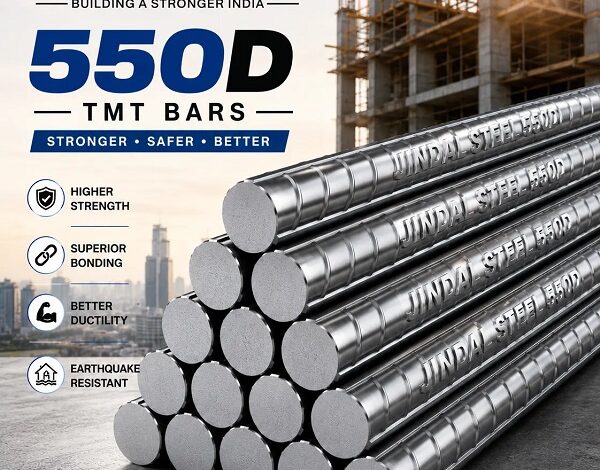
Behind a well-built structure lies a reinforcement system designed to handle different forces throughout its service life. Builders must consider steel quality, engineering specifications, fabrication methods, and site conditions before placing an order. Jindal Panther TMT Bar is a product that construction professionals may evaluate when planning reinforcement for residential buildings, commercial developments, and infrastructure. However, the right purchasing decision involves more than selecting a recognised product name. Buyers should examine technical documents, confirm the required grade, and organise deliveries around the construction schedule to maintain material control.
Understanding the Manufacturing Behind TMT Reinforcement
Thermo-mechanically treated steel undergoes a specialised production process. After hot rolling, manufacturers rapidly cool the bar surface and allow controlled self-tempering. This process creates a hardened exterior and a relatively ductile inner core. The resulting combination supports the mechanical requirements of reinforced concrete applications.
When evaluating Jindal Panther TMT Bar, buyers should understand that performance depends on the declared grade, manufacturing controls, and compliance with applicable standards. Request technical information instead of assuming that every reinforcement product offers identical characteristics.
Jindal Panther TMT Bar Grades and Specifications
Reinforcement steel comes in different strength grades, including Fe 415, Fe 500, Fe 500D, and Fe 550. Each grade has specified mechanical properties. Higher numerical values do not automatically make one option suitable for every structure.
Before purchasing Jindal Panther TMT Bar, check the structural drawings and material specifications. The engineer determines the appropriate grade according to loading conditions, structural design, and applicable building codes. Confirm the required diameter range as well. Bars may be specified in different sizes for columns, beams, slabs, and foundations.
Applications Across Residential and Commercial Developments
Reinforcement steel forms an important part of concrete construction. Depending on the approved design, it may be used in residential foundations, structural columns, roof slabs, beams, staircases, and retaining walls.
Commercial buildings often involve different loading conditions and structural arrangements. Therefore, engineers calculate reinforcement requirements according to building height, occupancy, soil conditions, and design loads. Jindal Panther TMT Bar should be selected only when its documented specifications satisfy those requirements.
Infrastructure projects also require careful material planning. Bridges, elevated structures, and other engineered developments follow detailed reinforcement schedules. Contractors must maintain consistency between approved drawings and supplied material.
Quality Verification Before Accepting a Consignment
Material inspection should begin when the truck reaches the construction site. Compare the invoice and purchase order with the bundle identification tags. Check the manufacturer’s markings, diameter, grade, and quantity before unloading is completed.
Request relevant test certificates for Jindal Panther TMT Bar. These documents help verify mechanical properties and chemical composition against the applicable requirements. IS 1786 is an important Indian Standard covering high-strength deformed steel bars and wires for concrete reinforcement.
Inspect the bars for cracks, severe corrosion, deep pitting, and physical damage. Keep questionable material separate until the responsible quality professional approves its use.
Fabrication Practices That Influence Structural Performance
Steel reinforcement must follow the bar bending schedule prepared from approved structural drawings. This document specifies cutting lengths, bends, hooks, shapes, and quantities. Workers should use suitable equipment to achieve accurate dimensions.
During fabrication, Jindal Panther TMT Bar should not undergo uncontrolled heating, welding, or repeated bending. Such activities may affect material properties. Follow approved procedures and engineering instructions whenever modifications become necessary.
Once reinforcement reaches its final position, inspect the spacing, lap lengths, anchorage, and concrete cover. Suitable chairs and cover blocks help maintain the required arrangement during concreting. Proper tying also prevents unnecessary movement.
Storage Arrangements for Better Material Management
An organised storage area protects construction materials and makes stock identification easier. Keep steel bundles above ground on stable supports. Choose a location away from standing water, chemicals, and unnecessary exposure to contamination.
Separate different diameters and grades to prevent accidental mixing. Keep bundle tags visible and maintain a record of incoming and issued quantities. When storing Jindal Panther TMT Bar, use suitable protective covers while allowing sufficient ventilation.
Inspect stored material before fabrication. If severe corrosion or surface damage appears, consult the site engineer before using it. Good stock management also reduces unnecessary handling and material losses.
Procurement Coordination with ULT Cement Booking
Construction schedules depend on timely material availability. ULT Cement Booking provides a channel for buyers to coordinate construction material enquiries and purchasing requirements.
When requesting Jindal Panther TMT Bar, specify the grade, diameter, estimated tonnage, delivery address, and expected arrival date. Ask for a quotation covering transport, applicable taxes, payment conditions, and unloading arrangements. Confirm stock and delivery commitments before finalising the purchase.
For larger developments, divide procurement into suitable delivery stages. This approach helps reduce storage pressure and keeps material availability aligned with reinforcement work. Compare quotations using matching specifications rather than considering the quoted rate alone.
Reducing Waste Through Accurate Quantity Planning
Unplanned purchasing can increase project expenditure. Contractors should calculate reinforcement requirements using the latest approved bar bending schedule. Include authorised laps, hooks, bends, and cutting allowances in the estimate.
Prepare separate quantity records for each diameter. This makes it easier to track consumption and identify differences between planned and actual usage. Reusable offcuts should be assessed according to engineering requirements rather than reused automatically.
Cement Selection Alongside Reinforcement Steel
JK OPC Cement is another construction material used in concrete and mortar preparation. Unlike reinforcement steel, cement forms part of the concrete matrix and contributes to its strength development. Buyers should select the appropriate cement according to the approved mix design and project specifications. Coordinating cement deliveries with steel availability can also support an organised concreting schedule.
Conclusion
Quality construction requires informed decisions at every stage, from technical evaluation to final installation. Jindal Panther TMT Bar should be purchased according to approved grades, documented properties, and structural requirements. Careful inspection, organised storage, and accurate quantity planning help contractors manage reinforcement efficiently. With clearly defined requirements and coordinated purchasing through ULT Cement Booking, buyers can organise material enquiries while keeping construction activities aligned with project schedules.